

There’s nothing worse than stepping into your car on a very sunny day and realizing the AC isn’t cooling at all. Most times, the fault could be from one of two key components, which are either the AC condenser or the compressor.
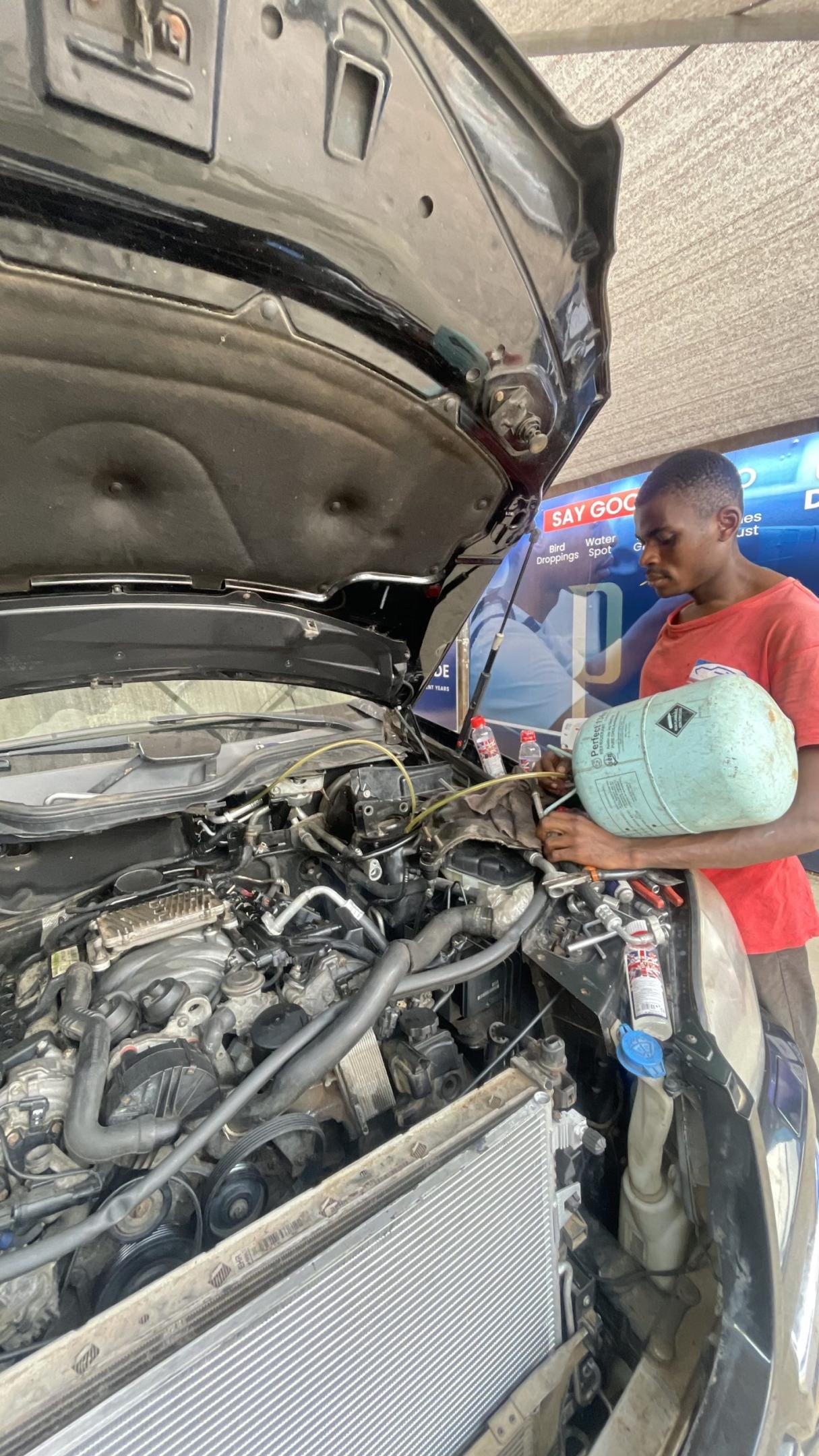
Recently, a 2011 Mercedes GL450 was brought to our workshop at Body Solutions Garage with this exact complaint. The owner said the air conditioning suddenly stopped working, or in his context, was not cooling at all. After our team carried out a suspension check, we discovered that the condenser had been damaged by road debris. Since the condenser is positioned right at the front of the vehicle, it can be constantly exposed to rocks, dirt, leaves, and even insects, which can gradually wear it down or cause immediate damage.
So now the big question is, how does a car’s AC system actually work? It works by circulating refrigerant through a closed loop. The compressor squeezes the refrigerant into a hot, high-pressure gas, and then the condenser will release that heat outside the car and turn the gas back into a liquid. After passing through the expansion valve and evaporator, the refrigerant will become cold and absorb heat from the cabin, giving you the cool air that comes through the vents of your car.
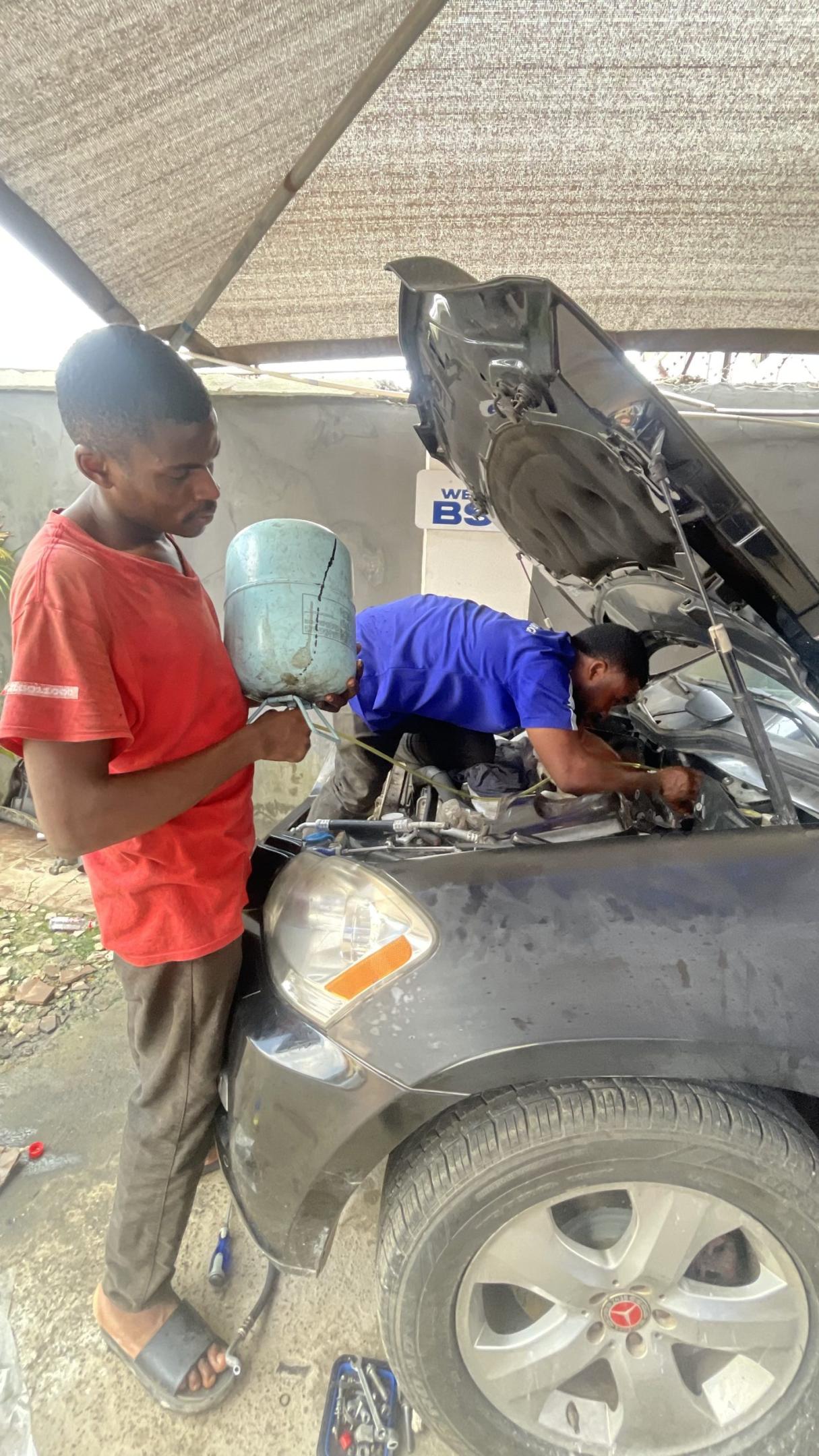
But not overlooking that in any other Sinero, the mechanical system could be a different thing. The compressor can fail due to low refrigerant, poor lubrication, electrical issues, contamination, or general wear and tear (leakages). The condenser, on the other hand, is prone to damage from impact, debris buildup, restricted airflow, leaks, or a faulty cooling fan.
So our team of experts recommended the professional solutions, which were the need for a system flush, a new dryer (accumulator), and vacuum testing to remove moisture.
Briefly recap that the compressor and condenser work together, and their failure points are mechanical damage and electrical/pressure issues. Note that AC repairs are not DIY; they involve specialized equipment, and ignoring the problem can lead to more expenses, so before your AC fault gets worse, give Body Solutions Garage a call
Body Solutions Garage: When Your Car’s AC Fails You
There’s nothing more frustrating than stepping into your car on a hot, sunny day only to discover your car’s air conditioning isn’t working. If your AC stops cooling, the problem often lies with one of two major components: the AC condenser or the compressor. Knowing which part is at fault is the first step toward getting back to a comfortably cool drive. Understanding Your Car’s AC System
A car’s AC system circulates a refrigerant through a closed loop to cool the cabin:
- Compressor: This is the heart of the system. It squeezes the refrigerant, turning it into a hot, high-pressure gas.
- Condenser: Located at the front of your car, the condenser acts like a mini-radiator. It releases the heat outside the car and converts the high-pressure gas back into a liquid.
- Expansion Valve & Evaporator: The liquid refrigerant flashes into a cold gas, absorbing heat from the cabin and delivering cool air through your vents.
Why Your Car AC Stops Cooling: Compressor vs. Condenser
While both components are critical, they have distinct common points of failure that can lead to a complete AC failure. Compressor Failure
When the AC compressor fails, it’s usually due to internal issues or a lack of maintenance. Common causes include:
- Low Refrigerant Levels/Leaks: The most frequent cause. Low pressure prevents the compressor from cycling properly, leading to burnout.
- Poor Lubrication: The compressor oil needs to circulate with the refrigerant. A lack of oil causes excessive friction and catastrophic failure.
- Electrical Faults: Issues with the clutch or electrical wiring can prevent the compressor from engaging.
- Internal Contamination: Debris from a previous system failure can damage the new compressor.
Condenser Damage: The Exposed Component
The AC condenser is highly exposed, making it prone to external damage:
- Impact from Road Debris: Because it sits right behind the grille, the condenser is constantly bombarded by rocks, gravel, and road debris, which can puncture the delicate fins and cause a refrigerant leak.
- Restricted Airflow/Debris Buildup: Dirt, leaves, and bugs can clog the fins, restricting the heat-releasing process and causing the AC to blow warm air.
- Faulty Cooling Fan: If the fan next to the condenser isn’t working, the condenser can’t shed heat effectively, drastically reducing cooling performance.
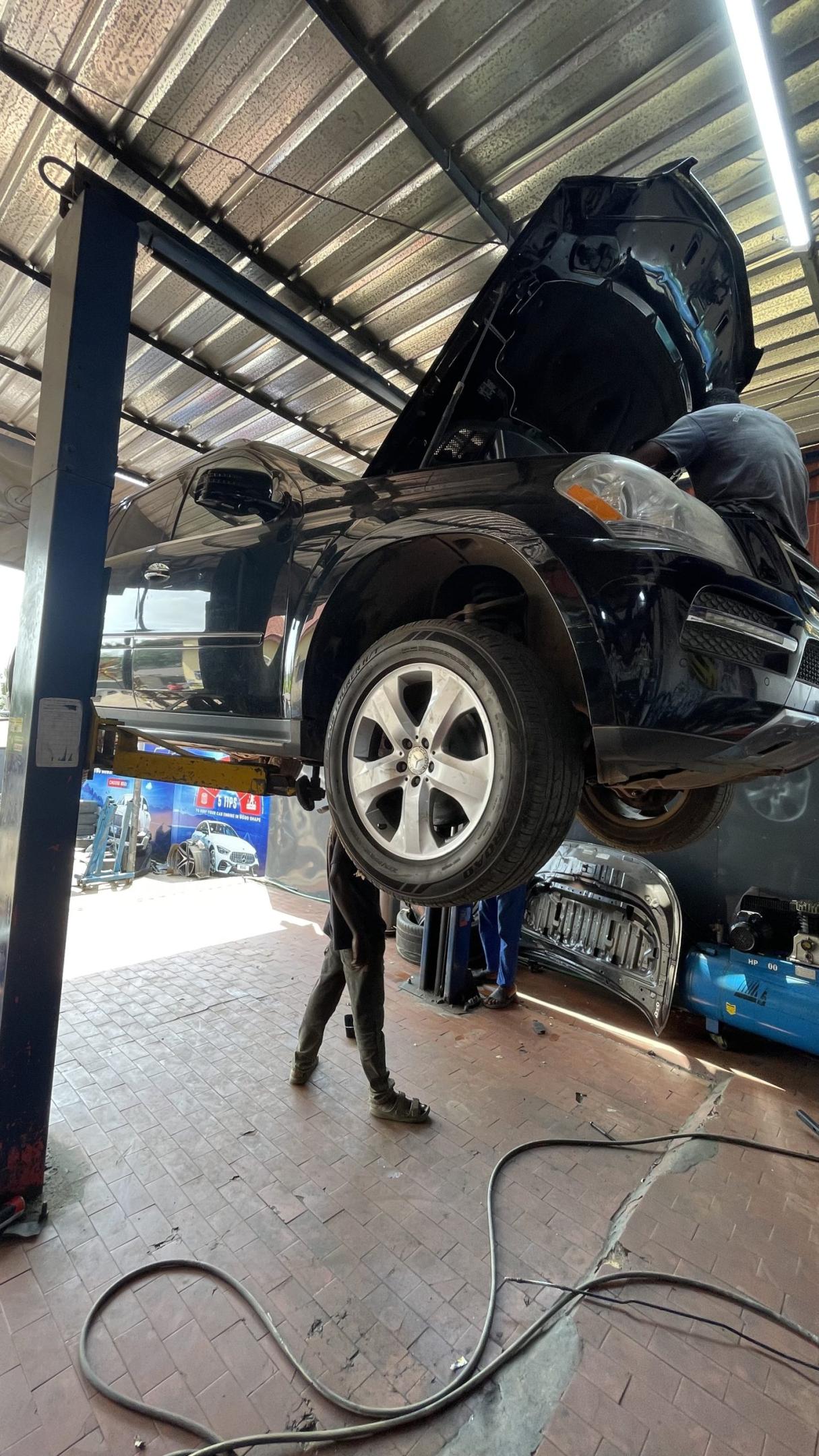
Recently, a 2011 Mercedes GL450 was brought to our Body Solutions Garage workshop with a complete AC failure. The air conditioning had suddenly stopped cooling. Our expert team performed a thorough inspection and quickly diagnosed that the condenser had been damaged by road debris, causing a leak in the system.
The professional AC repair solution recommended and executed by our specialists included:
- Replace the damaged condenser.
- A full system flush to remove any contaminants.
- Installation of a new dryer (accumulator) to absorb moisture.
- Vacuum testing to thoroughly remove all moisture and ensure a perfect seal.
- Recharging the system with the correct amount of refrigerant and oil.
Don’t Delay: Professional AC Repair is Essential
Car AC repairs are not a simple DIY job; they require specialized equipment and certified technicians. Ignoring an AC problem will only lead to more severe system damage—for example, a small leak can eventually lead to compressor failure, significantly increasing your repair expenses.
If your car is blowing warm air or your AC isn’t working, contact Body Solutions Garage today. We are your local experts for comprehensive diagnostics and professional auto AC repair, ensuring you drive away cool and comfortable.
Call the Experts at Body Solutions Garage before the fault gets worse!